WALTHER, PETER
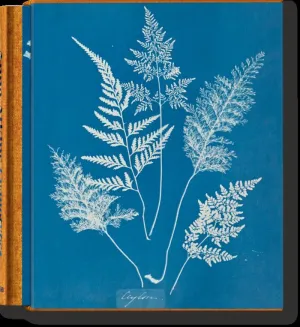
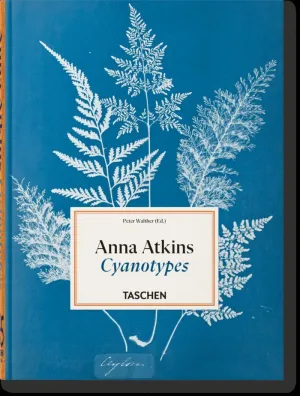
At the dawn of the Victorian era in her open-air laboratory in Halstead, Kent, Anna Atkins embarked on a radical experiment to document botanical species using a completely new artistic medium. The inimitable cyanotype photograms of algae and ferns she created were made into the first books to feature photographic images. Striking yet ethereal, these albums are a perfect synthesis of art and science.
Although the cyanotype technique was discovered by her friend John Herschel, Atkins was the first to realize both its practical purpose for her own interests in botany and taxonomy, and its intriguing artistic potential. The process, which involved fixing the object on sensitized paper and exposing it directly to sunlight, results in the Prussian blue pigment that forms the unmistakeable backdrop to these artworks.
Atkins albums British Algae (18431853) and Cyanotypes of British and Foreign Ferns (1853), the latter of which was produced with her friend Anne Dixon, are works of remarkable rarity. They reveal her mastery of multiple disciplines: While the cyanotype process allowed Atkins to meet the challenges of accurate representation, the delicate contours of the specimens, set above the intense blue background, has lent the images a timeless aesthetic appeal.
This edition, drawing extensively from the copies of the New York Public Library and J. Paul Getty Museum, has carefully compiled cyanotypes from several sources to reprint Atkins seminal works. Almost 400 cyanotype impressions are accompanied by a series of introductory essays from Peter Walther, placing Atkins work in its scientific and art-historical contexts and paying rightful tribute to the groundbreaking contributions of a female pioneer.En los albores de la era victoriana, en su laboratorio al aire libre en Halstead, Kent, Anna Atkins se embarcó en un experimento radical para documentar especies botánicas utilizando un medio artístico completamente nuevo. Los inimitables cianotipos de algas y helechos que creó se convirtieron en los primeros libros que presentaban imágenes fotográficas. Impactantes aunque etéreos, estos álbumes son una síntesis perfecta de arte y ciencia.
Aunque la técnica de la cianotipia fue descubierta por su amigo John Herschel, Atkins fue la primera en darse cuenta tanto de su utilidad práctica para sus propios intereses en botánica y taxonomía como de su intrigante potencial artístico. El proceso, que implicaba fijar el objeto sobre papel sensible y exponerlo directamente a la luz solar, da como resultado el pigmento azul de Prusia que constituye el inconfundible telón de fondo de estas obras de arte.
Los álbumes de Atkins British Algae (18431853) y Cyanotypes of British and Foreign Ferns (1853), el último de los cuales fue producido con su amiga Anne Dixon, son obras de notable rareza. Revelan su dominio de múltiples disciplinas: Si bien el proceso de cianotipia permitió a Atkins enfrentarse al desafío de una representación precisa, los contornos delicados de los especímenes, colocados sobre el fondo azul intenso, le han dado a las imágenes un atractivo estético atemporal.
Esta edición, basada en gran medida en las copias de la Biblioteca Pública de Nueva York y del J. Paul Getty Museum, ha compilado cuidadosamente cianotipos de varias fuentes para reimprimir las innovadoras obras de Atkins. Casi 400 impresiones de cianotipos acompañadas de una serie de ensayos introductorios de Peter Walther que sitúan el trabajo de Atkins en sus contextos científico e histórico-artístico y rinden un merecido homenaje a las contribuciones de una pionera.