JAN STRUTHER
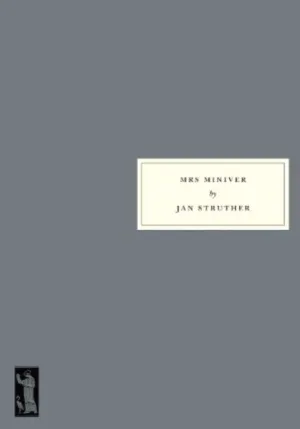
Mrs Miniver began life in 1937 when its author, Jan Struther, was commissioned to write occasional columns for The Times about an ordinary sort of woman like yourself and this she did. Like the real-life Jan Struther, Mrs Miniver is a young married woman living in Chelsea (very close to Greenery Street, PB No. 35), who shops in the Kings Road, discusses the weeks menus with cook, enjoys her children only as much as she wants to, and drives up to Scotland for the glorious twelfth. The most significant sentence is at the end of the first column when with a little sigh of contentment [she] rang for tea.
Some of us will find this slightly enraging since there are now probably only about ten people in the UK, not counting Queen Camilla, who ring for tea. But annoyance is the wrong way to react. The better way is to see the book as a historical document about the everyday life of the English upper-middle classes during the 1930s, a life that would change dramatically and for ever during the war. Its a world as distant from us now as the Victorian period, but that does not stop the book from being highly entertaining, fun and interesting.
In addition, although by our standards Mrs Miniver is a tad complacent, she is not blind to other peoples prejudices about, for example, evacuees. An acquaintance tells her: I said to her before she left: Even if the worst does come to the worst, you must make it quite clear to the authorities that I can only accept Really Nice Children. And where, Mrs. Miniver could not restrain herself from asking, are the other ones to go? There are sure to be camps, said Lady Constance firmly. This has more than a tinge of Mollie Panter-Downes, and no greater compliment could one pay.
Jan Struther was a marvellous writer, remembered nowadays not just for Mrs Miniver but for her hymns (eg. Lord of all hopefulness and When a knight won his spurs). As her granddaughter Ysenda Maxtone Graham says in her Persephone Preface, she was the master of the small universal truth. The Mrs Miniver pieces are not weighty or profound but they are memorable and to the point.
The Persephone Books edition of Mrs Miniver not only contains a new preface by Ysenda Maxtone Graham and all of the columns written for The Times, but also the text of a talk given by Jan Struther in early 1940 titled 'The Truth About Mrs Miniver' and reviews of the book by EM Forster and Rosamond Lehmann
A word here about Persephone publishing neglected books. No one could argue that Mrs Miniver is neglected. But many people will not have read it before, and in any case the mix of wit, social history, beautiful writing and domestic feminism ensures that its a perfect fit for our list.