LAUER MANENTI, RUTH
An intimate reflection on loss, mourning and memory, made manifest through Manenti's spectral black-and-white photography
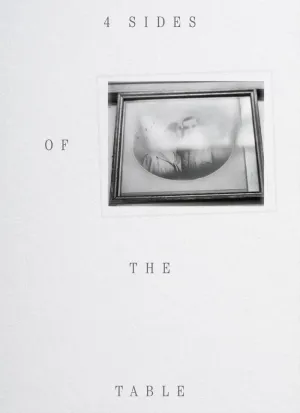
Upon receiving a large-format camera in 2012, the American photographer Ruth Lauer Manenti (born 1968) at last accessed a poetic sensibility she had first sought within drawing and painting. Her spectral photographs evoke the ephemeral motion of life and the vertiginous memories it impresses. In her new series, 4 Sides of The Table, made from 2022 to 2024, Manenti continues her meditation upon time's passage. The inciting image for this series emerged from an intimate, sorrowful scene: her mother's best friend, June, reading poetry as Manenti's mother lay dying in bed. In the wake of loss, Manenti found within June a maternal replacement. She began photographing June in segmented parts from various angles: hands, legs, front, back, partial views. When June's own daughter unexpectedly died, Manenti, too, became a replacement. Together, Manenti and June document the poignant work of mourning-the effort to preserve the unseen through new material forms.
-------------------------------------------------------------------
Tras el gran éxito de su primer libro I Imagined it Empty, que se agotó en apenas unos meses, la fotógrafa Ruth Manenti se complace en presentar su segundo fotolibro.4 Sides of the Table nos regala la misma sensibilidad de su primer trabajo, evocando en el lector una poderosa reacción emocional.Se trata del tiempo que tarda la luz en atravesar una habitación, en comerse una hogaza de pan o en que alguien muera. Sé que no viviré para siempre. Un día solo quedarán rastros de mi vida. Yo también seré fugaz como la luz del sol que entra por mi ventana y aparece sobre un trozo de vidrio. Al prestar atención a todo lo que pasa, sé que la muerte se aproxima.4 Sides of the Table fue realizado entre 2022 y 2024. En la primavera de 2017 estuve con mi madre en una habitación vacía. La luz del sol entraba por las ventanas. Su mejor amiga, June, estaba a su lado leyendo poesía en voz alta. Mi madre murió unas horas después. Como ya no podía fotografiar a mi madre, me pareció natural fotografiar a June. Fotografié sus manos, sus piernas, de espaldas, de frente, vistas parciales, etc., sintiendo que podía convencerme más fácilmente de que era mi madre al retratarla en fragmentos en lugar de mostrar su figura completa. Durante los meses en que visité a June, su hija falleció inesperadamente. Pensé que después de aquello quizás no quisiera continuar con nuestras sesiones de fotos, pero sí lo hizo. La cámara nos dio la libertad que necesitábamos para imaginar que nos pertenecíamos la una a la otra.